
The concerns grew when the head of Iranian Airlines Union Mahdi Aliyari declared that airports in Britain, Germany and the United Arab Emirates (UAE) had started to deny fuel to aircrafts from Iran as a measure added to the recent sanctions.
Although the report was rejected by the officials of all the three countries as well as Iran's foreign ministry spokesman Ramin Mehmanparast, it has caused a new wave of worries among the officials and lawmakers of the Islamic Republic.
The majority of the members of the national security and foreign policy commission of Iran's Parliament (Majlis) voiced concern over the issue and offered different views, but the statesmen try to remove the anxieties by insisting that the fuel needed for passenger planes is supplied within the country.
According to AFP, in London a British government spokesman said: "At present the British government is not aware of any occasions when fuel has been refused in the UK," and a Dubai airport spokesman said Iranian aircraft were still able to refuel. "Iranian planes traveling to and from Dubai through Dubai International Airport still enjoy the refueling service," he said.
However the reports on the new ban have become a source of concern for Iranian experts given that so far the government has been primarily thinking about providing gasoline for the cars and no crash project has been thought by them to tackle such possible unpredicted problems.
In the meantime members of the Parliament stressed that Iran reserves the right to take retaliatory measures against those countries that deny fuel to Iranian aircrafts.
Heshmatollah Falahat-Pisheh, a member of the Majlis' national security and foreign policy commission told Iranian Students News Agency (ISNA): "Iran will do the same to ships and planes of those countries that cause problems for us."
Criticizing the unilateral punitive measures which are beyond the new sanctions imposed by the United Nations Security Council (UNSC) on the Islamic Republic, he said that such actions are being taken against the Iranian nation not Iranian government.
Falahatpisheh added that despite claims that sanctions only seek to target Iran's nuclear program, the new measures prove that the sanctions have targeted the country's development programs.
Meanwhile, Farid Ameri, the head of the National Iranian Oil Distribution Company (NIODC) told Khabar Online that the oil ministry is completely equipped to supply the aircraft fuel within the country: "Currently Iran can provide jet plane fuel to an unlimited scale."
"At the moment, almost 4 million liters of high quality plane fuel are produced a day in our refineries," he said adding that with the same facility, Iran refuels aircrafts flying to the country's airports without any problem.
Although he insists that denying fuel to passenger planes would have no negative effect on the operations of Iranian airlines, analysts believe the continuation of this trend definitely will confuse the system of Iran's aviation transport to overseas.
Gala Riani at IHS Global Insight said any measure targeting the provision of fuel to Iranian flights would seem a "very strict reading" of the new US sanctions law. She said it would not necessarily be the kind of measures the legislation, which is more directed at trade in fuel, aimed to achieve.
Interestingly, The German office of Iran Air appeared to dismiss the reports from Tehran.
"It is not correct," Mohammad Reza Rajabi, the head of the airline's operations in Germany, told AFP. Flights and fuelling services had continued without interruption in Germany.
The German transport ministry said in a statement that neither the US nor United Nations sanctions covered the refueling of Iranian passenger planes.
But a report in Tuesday's edition of the Financial Times Deutschland said oil giant BP had not renewed a contract to supply Iranian airlines with fuel after it had expired at the end of June. Two Iranian aircraft took off from a German airport last week without refueling, a spokeswoman said on Thursday, days after reports Iran's planes had been denied fuel in three countries due to U.S. sanctions.
"We can confirm that these aircraft flew from Hamburg but did not take on fuel here," said Hamburg Airport spokeswoman Katja Tempel. "We cannot say where they flew to or where they refueled," Reuters reported.
Last Thursday, US President Barack Obama signed into law the toughest ever US sanctions on Iran, which he said would strike at Tehran's capacity to finance its nuclear program.
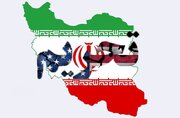
The measures, on top of new UN and European sanctions, aim to choke off Iran's access to imports of refined petroleum products like gasoline and jet fuel, and to curb its access to the international banking system.
Earlier the fourth round of the United Nations Security Council sanctions against Iran was passed on June 9 as the West powers claim the Islamic Republic's nuclear program is meant for producing weapons. Tehran firmly rejects the allegation insisting that the program is aimed at peaceful purposes including producing electricity.





نظر شما